
GASP!
This is what most trumpet players would do after reading my latest blog title. (“how dare you compare us to the joke of the orchestra, etc…”). So let me clarify – the similarity is not in the instruments themselves, or even in the players. However, it is in the act of transposition that trumpet players are often called upon to do.
The common trumpet is the B-Flat trumpet. It is what all grade school students start on and it’s what most people play the majority of the time. Since we’re in B-Flat, we often need to transpose up one whole step to play in concert pitch. I am thankful I learned how to do this at a young age, since even though I no longer regularly play the trumpet, I still use this transposition technique often. Here is the reason why:
Viola players read in alto clef. That means that middle C is on the third line of their staff. 
If you are used to reading in treble clef (as most trumpet players are), that note looks like a B (above middle C). But since trumpet players are so used to transposing up a step, we can take that note up a step, and then DOWN AN OCTAVE- to middle C. All we have to do is add that additional step of down an octave, and trumpet players can read alto clef very easily.
This technique has helped me alot since I went to college. Having to sight sing in 4 different clefs, all I would think was to just sing up a step whenever I saw alto clef. I also sometimes need to play open scores on piano utilizing these other clefs. And if you can read alto clef, you can train yourself to read tenor clef. Basically, tenor clef is DOWN a step (from what the note is in treble), then down an octave.
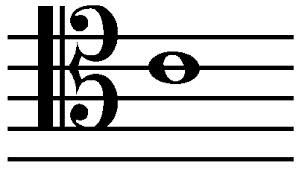
In the picture above, the 4th line note would be D in treble clef, but it is middle C in tenor clef.
So, the next time you see your friendly neighborhood viola player, let them know you understand what it’s like to read in alto clef. And maybe even try to cut down on those viola jokes.