All posts by BobMcNally

The Message Behind the Music

There is no shortage of amazing brass players in the world.  There are those whose technical prowess is just simply unbelievable.  However, I find that these technical feats are not really what I’m drawn to while listening to performances.

One of my first trumpet teachers, Derek Smith, said in the liner notes to his CD, Heavenly Gales, that his playing was always about the message behind the music.   In his case, playing for the Salvation Army Staff Band, it was about the Christian message.   When I listen to his recordings, I hear the love that he has for the Savior, coming through in the melodies he plays.  It is the message that draws me in, and I believe, countless others as well.

Another great musician, Samuel Hsu once said, “Technique is nothing; love is everything.”  Without the personal expression of the performer, there is something missing in the music.  Sure, it may sound good, but it won’t touch the listener.

There is a wonderful recording by Derek Smith’s son, Philip Smith, of the Gershwin tune, Someone to Watch Over Me.  Even though it was originally intended as a secular tune, I feel that Phil has made it about the Lord watching over him, in his daily life.  It may just be my own feelings, but have a listen for yourself.


Endurance and Loud Playing

Here is a helpful mini-lesson I found on the blog called The Trumpet Gearhead.  The short article on endurance and loud playing is actually some instruction from non other than David Bilger, principal trumpet of the Philadelphia Orchestra.  I plan to try these out soon!


Editor’s note: The following excerpt is written by David Bilger and used with his permission. It describes an exercise for improving power and endurance that Mr. Bilger learned from Renold Schilke.  Mr. Bilger currently is Principal Trumpet of the Philadelphia Orchestra, and was previously Principal of the Dallas Symphony. He currently teaches at The Curtis Institute of Music and Temple University in Philadelphia.

Endurance:

As is the case with range, endurance is also a combination of many of the topics we have already touched upon, and will benefit from many of the same etudes. The two other things that will most quickly improve endurance are efficiency and loud practice.

1. Efficiency is a necessity for any brass player. Playing the trumpet is extremely physical, and efficient playing will reduce the demands on the player. Efficiency can be achieved by taking care of the following:

  • Always use a good volume of air, and high air speed
  • Always play with your embouchure set
  • Do not use excessive pressure
  • Practice upper body relaxation
  • Always think about what you are doing while you play


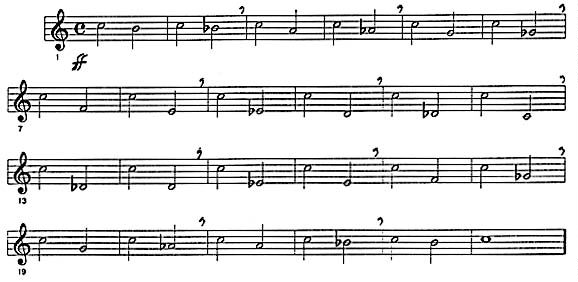
2. Loud practice is another part of trumpet playing that is often overlooked. Remember, when practicing at loud dynamic levels, always keep your sound from distorting, and never cause yourself physical pain. Do not use excessive pressure! Orchestral excerpts are a good source of loud material, as are the Brandt Orchestral Etudes. Perhaps the best resource for loud playing are the Schilke Power Exercises. Playing 5 minutes of these a day will be all you need to develop the necessary strength for increased endurance.

Mr. Bilger writes specifically about this exercise:

I had the pleasure and honor of working with Mr. Schilke for a week at the Banff Centre in 1980 when he was hanging out with the Canadian Brass who were on the faculty there. During that week he showed me the power exercises that I outlined in my master class materials. I have all my students do them!

They should be played at quarter note = 60, and with huge quick breaths after every four half notes. And most importantly, they should be played as loud as the player can control, with attention being paid to stability of sound and pitch, as well as dynamic. They are designed for developing an “orchestral” sound, but are of use to all players who want to develop additional power in their playing.

Transpose into different keys.

(right-click and open in new tab/window to get an enlarged view of the exercise)

Power Exercise-Bilger


Just Where He Needs Me

Inspiring words to the hymn, Just Where He Needs Me.  I’ve included a link below to a video of one of my first cornet teachers, Derek Smith.  He is playing this hymn with a Salvation Army Staff Band, one of which my dad was the principal euphonium player (New York Staff Band).

The words remind us that whatever our current situation, God goes before us and prepares the way.  We may not feel we are in the perfect location or living the life we intended for ourselves.  But God knows where we are needed in the plans He has for us.  Let’s remember that His ways are higher than our ways, and His thoughts are higher than our thoughts!

http://www.youtube.com/watch?v=hgHFHvhfcT8


1 Just where He needs me, there would I be,
Working for Jesus who died for me;
Thro’ disappointment or victory,
Just where He needs me most!

Refrain:
Just where He needs me most,
Just where He needs me most;
His work to do, faithful and true,
Just where He needs me most.

2 Just where He needs me! He goes before;
Just where He needs me, till life is o’er;
Till I shall see Him on heaven’s shore,
Just where He needs me most! [Refrain]

3 Just where He needs me by day or night;
Just where He needs me—into the fight,
Or wait for orders; He leads aright,
Just where He needs me most! [Refrain]

4 Just where He needs me! He knows the way,
So would I follow my Lord today;
Where Jesus wants me, there would I stay,
Just where He needs me most! [Refrain]

Academy Chorale and Chamber Society

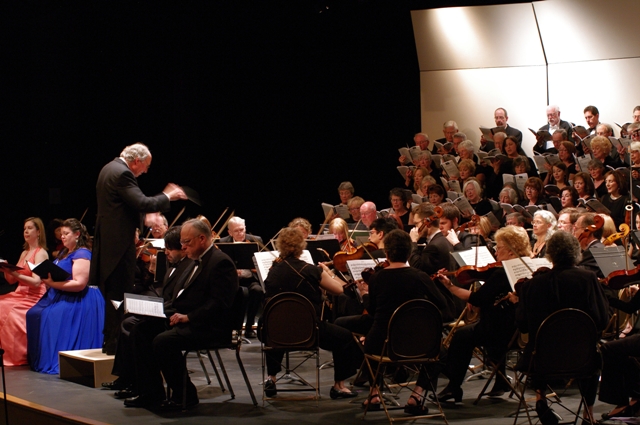
On Saturday, December 7th, 2013 the chorus and orchestra, under the direction of Michael Kemp, will be performing:

Lt. Kije Suite -Sergei Prokofiev
Jeux d’enfants, Op. 22  -Georges Bizet
In Terra Pax  -Gerald Finzi
Many Moods of Christmas -Robert Russell Bennett/Robert Shaw

ACS.picture

The venue will be:

Gwynedd Mercy Academy Performing Arts Center
1345 Sumneytown Pike
Gwynedd Valley, PA  19437

for more information, go to:  http://academyconcerts.org

ACS.picture2